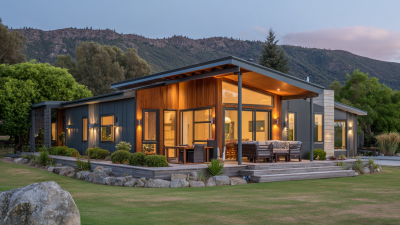
You know, as more folks get serious about living sustainably, the prefab home industry is really going through some big changes. I read somewhere that, according to Grand View Research, the global market for prefab houses is expected to hit around $225 billion by 2028, growing at about 6.3% each year. That’s pretty impressive, and it shows how more people are starting to see the environmental perks and cost savings of these homes. It’s no wonder they’re becoming a popular choice for eco-conscious buyers.
Looking ahead to 2025, there are a bunch of cool trends to watch out for in the prefab world. Think energy-efficient materials, snazzy modular designs — these aren’t just about making homes look good; they’re actually changing how we build and live sustainably. Companies like Blokable and Katerra are really pushing the envelope, using tech to create customizable and efficient housing solutions. When you take a look at these trends, it’s clear that future housing isn’t just about bricks and mortar — it’s about building a better, greener world with smart design and construction that actually makes a difference.
As we approach 2025, the integration of emerging smart home technologies is poised to redefine prefabricated living solutions for sustainable living. With the global smart home market projected to reach $174 billion by 2025, the convergence of automation and eco-friendliness has never been more apparent. Today's consumers are increasingly seeking homes that not only offer comfort and convenience but also prioritize energy efficiency and sustainability. The adaptability of modular construction plays a critical role in this shift, allowing builders to implement smart technologies that promote a green lifestyle while maintaining affordability.
Recent advancements showcase a variety of non-AI-powered innovations that enhance the smart home experience. For instance, smart irrigation systems and energy management platforms are gaining traction, helping homeowners reduce their carbon footprint by optimizing energy and water usage. Additionally, the emergence of integrated security systems is addressing the need for protection and peace of mind in an increasingly connected world. As developers explore ways to incorporate these technologies, the expectation that homes will come equipped with smart devices from the outset is fundamentally reshaping market demands and guiding future construction practices.
The prefabricated home industry is witnessing a transformative shift driven by innovative sustainable materials. As reported by the U.S. Green Building Council, the use of sustainable materials in construction is projected to reach a market value of over $500 billion by 2025. This rising trend emphasizes the increasing demand for eco-friendly products that not only minimize environmental impact but also enhance energy efficiency in residential spaces.
Among the materials gaining popularity are cross-laminated timber (CLT), recycled steel, and hempcrete. CLT, for instance, has been shown to have a carbon-negative footprint, sequestering CO2 throughout its lifecycle. A study from the Forest Products Laboratory indicates that using CLT in construction can reduce emissions by as much as 30% compared to traditional building materials. Meanwhile, recycled steel contributes to reducing waste, with nearly 88% of steel being recycled in the U.S., as per the Steel Recycling Institute.
These advancements are paving the way for a new era of prefabricated homes that are not only aesthetically pleasing but also align with sustainable living solutions. As consumers become increasingly aware of their environmental footprint, the integration of these materials reflects a broader commitment within the industry to create homes that support a sustainable future.
As we look ahead to 2025, energy-efficient design trends in prefabricated housing are set to revolutionize sustainable living solutions. According to a report from the U.S. Department of Energy, homes account for approximately 22% of the total energy consumed in the United States, highlighting an urgent need for more efficient designs. Prefabricated homes are increasingly utilizing innovative technologies such as smart home systems and advanced insulation materials that significantly reduce energy consumption, aligning with the global push towards sustainability.
One prominent trend is the integration of renewable energy sources, such as solar panels, into prefab constructions. A study by the National Renewable Energy Laboratory indicates that homes equipped with solar technology can reduce energy costs by up to 90% over time. Furthermore, systems such as energy recovery ventilators (ERVs) are being incorporated to enhance indoor air quality while minimizing waste, ensuring these homes aren’t just energy-efficient but also healthier for their occupants. As the prefab housing market continues to evolve, these advancements present opportunities for both builders and buyers to embrace a more eco-friendly approach to modern living.
The rise of modular construction is reshaping the landscape of eco-friendly living spaces. By employing prefabrication techniques, manufacturers can significantly reduce waste, lower energy consumption during construction, and enhance overall sustainability. According to a report by the Modular Building Institute, modular construction can minimize construction waste by up to 90%, fostering an environmentally responsible approach to building homes. This method not only streamlines construction processes but also ensures higher precision in the assembly of living spaces, leading to improved energy efficiency.
Tips for incorporating modular construction: Focus on choosing materials that are locally sourced and sustainable. Many modular home manufacturers prioritize eco-friendly materials, which can significantly reduce the carbon footprint of homes. Additionally, consider opting for designs that maximize natural light and ventilation, which can further enhance the energy efficiency of your living space.
Another trend in prefabricated homes is the integration of smart technology to monitor and optimize energy use. According to a report from McKinsey, homes equipped with smart technology can reduce energy usage by up to 30%. Homeowners should look for modules that come with integrated smart grids or energy management systems to ensure they are making the most of their eco-friendly investments.
The North America modular construction market is on a trajectory of significant growth, with projections indicating an increase from USD 24.48 billion in 2025 to USD 40.62 billion by 2032, representing a robust CAGR of 7.5%. This upward trend highlights a burgeoning demand for prefabricated homes, driven by a growing consumer preference for customization in sustainable living solutions. As homebuyers seek unique designs that reflect their personal tastes and lifestyles, the market for customized prefabricated homes is becoming increasingly appealing.
Moreover, the global prefabricated building market is also experiencing substantial expansion, projected to reach USD 381.8 billion by 2034, with a CAGR of 5.5%. This growth is indicative of an overarching trend where homebuyers are not just looking for sustainable options but also desiring tailored solutions that accommodate their specific needs. As the industry evolves, the integration of advanced technologies will likely play a pivotal role in meeting these customization demands, paving the way for more personalized housing experiences.
As the demand for sustainable living solutions rises, the incorporation of renewable energy solutions into prefabricated homes is becoming a pivotal trend in the housing industry. According to a report by the Global Prefabrication and Modular Construction Market, the prefabricated home market is projected to reach $215 billion by 2025, driven largely by a shift toward eco-friendly construction methods. These homes not only promise efficiency in building but can also integrate renewable energy technologies such as solar panels, wind turbines, and geothermal heating to significantly reduce energy costs for homeowners.
In particular, the integration of solar energy systems is expected to dominate the landscape of prefabricated homes. A study from the National Renewable Energy Laboratory suggests that solar energy could account for up to 30% of residential energy consumption by 2030. As prefabricated homes continue to evolve, builders are increasingly incorporating pre-installed solar panel systems, enabling homeowners to start their journey towards energy independence from day one. This proactive approach not only aligns with global sustainability goals but also enhances property value, making a compelling case for future homeowners looking to invest in energy-efficient living spaces.
: Energy-efficient design in prefabricated housing is crucial as homes account for approximately 22% of total energy consumption in the U.S., calling for more efficient designs to promote sustainability.
The integration of renewable energy sources like solar panels in prefab homes can significantly reduce energy costs, with potential savings of up to 90% over time.
Energy recovery ventilators (ERVs) enhance indoor air quality while minimizing waste, making prefab homes not only energy-efficient but also healthier for occupants.
Modular construction reduces construction waste by up to 90% and lowers energy consumption during building, leading to higher sustainability in home development.
In modular construction, it’s important to choose locally sourced and sustainable materials to reduce the carbon footprint of homes.
Designs that maximize natural light and ventilation can enhance the energy efficiency of living spaces, reducing the need for artificial lighting and mechanical heating or cooling.
Smart technology can optimize energy use in homes, potentially reducing energy consumption by up to 30% through integrated smart grids or energy management systems.
By 2025, trends such as enhanced integration of renewable energy, improved insulation materials, and advanced smart home systems are expected to characterize the prefabricated housing market.
A global push towards sustainability is essential to address climate change and reduce the environmental impact of housing, aligning living spaces with eco-friendly practices.
Embracing eco-friendly practices in prefabricated housing provides builders with innovative developments while allowing buyers to invest in healthier, more energy-efficient living spaces.
The article "2025 Top Prefabricated Home Trends for Sustainable Living Solutions" explores the future of prefabricated homes, highlighting several key trends shaping the industry. Emerging smart home technologies are set to revolutionize prefabricated living, enhancing convenience and energy management. Innovative sustainable materials promise to redefine construction practices, making homes more eco-friendly. Additionally, energy-efficient design trends will play a crucial role in minimizing environmental impact while providing comfort to residents.
Modular construction is emphasized as a significant contributor to eco-friendly living spaces, allowing for greater efficiency and reduced waste. Market demand for customization in prefabricated homes is on the rise, offering insights into consumer preferences. Lastly, the integration of renewable energy solutions will be vital in creating sustainable prefab homes that align with future living standards. Companies like China Construction Integrated Building Co., Ltd. are well-positioned to implement these trends, given their comprehensive capabilities in prefab house supply and integrated construction solutions.