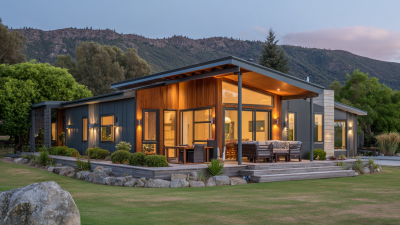
Lately, you’ve probably noticed that prefabricated homes have become pretty popular again. They offer a pretty sleek, modern take on solving housing issues, you know? Companies like Blu Homes and Method Homes are really pushing ahead in this space, making a real name for themselves.
So, here’s the gist: a prefabricated home is built somewhere else—off-site—and then moved to where you want it. This approach can cut down construction time quite a bit, which is a huge win. Plus, it tends to produce less waste and helps make homes more energy-efficient. That said, some folks do worry about how customizable these homes actually are.
Of course, not everyone is sold on prefabricated homes. There are some common myths, especially around quality and durability, that make people hesitant. A lot of potential buyers wonder if these homes will stand the test of time or live up to their expectations. Addressing these worries is pretty key for companies trying to grow this market and prove that prefab can really be a solid choice.

Benefits of Prefabricated Homes: An Overview
Prefabricated homes are gaining popularity for various reasons. They offer a unique approach to building that can simplify the construction process. These homes are pre-built in sections, allowing for quicker assembly on-site.
This efficiency can lead to lower labor costs and reduced construction time. Families may find that they can move into their new home much sooner than traditional building methods allow.
Another significant benefit is sustainability. Many prefabricated homes use eco-friendly materials. They often have energy-efficient designs that reduce utility bills. However, it’s essential to choose wisely, as not every prefabricated home is created equal.
Some designs may lack durability or adaptability to specific climates. Homeowners should consider local regulations and the long-term viability of their chosen model.
Customization is possible with prefabricated homes, allowing for personal touches. Yet, some may feel constrained by available designs. Certain features may not fit every homeowner's need or preference.
Each decision requires careful thought to ensure that the final result aligns with the homeowner's vision. While the advantages are clear, some challenges may arise that require ongoing reflection.
Cost Efficiency of Prefabricated Homes Compared to Traditional Homes
Prefabricated homes have gained attention for their cost efficiency. A report from the National Association of Home Builders indicates that prefabricated homes can be built for 10-20% less than traditional homes. This significant savings is largely due to reduced labor costs and streamlined construction processes. Factory production minimizes waste and uses materials more efficiently.
Moreover, the speed of construction is remarkable. Prefab homes can be assembled in a matter of weeks. Traditional homes may take months to complete, incurring additional costs. A Harvard study shows that construction delays often exceed initial budgets. With prefabricated homes, the timeline is more predictable, offering financial advantages.
Yet, it’s essential to consider the full picture. Some buyers report that financing options for prefab homes can be more limited. This can be a challenge for potential homeowners. Additionally, resale values may not always match those of traditional homes. Buyers need to weigh these factors carefully. Overall, prefabricated homes offer attractive cost benefits, but potential drawbacks require thoughtful consideration.
Time Savings in Construction: How Prefab Homes Speed Up Building
Prefabricated homes are gaining attention for their efficiency. One major advantage is the time savings in construction. Studies show that these homes can be built up to 50% faster than traditional constructions. This speed comes from off-site manufacturing. Building sections in a factory leads to better coordination and fewer delays due to weather.
Construction timelines for prefab homes can shrink from months to weeks. For instance, a report from the National Association of Home Builders indicates that prefab projects often take around 12 weeks, compared to over 20 weeks for conventional sites. This rapid turnaround provides homeowners with quicker occupancy. However, it does call for careful planning and precise execution. One miscalculation can lead to delays, challenging the benefits of speed.
Moreover, prefabrication reduces on-site labor. This reduction can cut costs and minimize potential errors. But it’s crucial to ensure quality control at the factory. Poor workmanship in prefabrication can cause future issues. Buyers should remain cautious. In the push for speed, maintaining high standards is essential for lasting satisfaction.
Environmental Impact: Sustainability of Prefabricated Homes
Prefabricated homes are gaining attention for their sustainability.
These homes use fewer resources compared to traditional building methods, reducing waste significantly. They often utilize
eco-friendly materials, which minimizes the carbon footprint
associated with construction.
Building prefabricated homes can lead to lower energy consumption. Many designs incorporate efficient insulation and energy systems.
These features can lower utility bills for homeowners. However, not every prefabricated home meets the highest standards of sustainability.
Some might still rely on materials that are less eco-friendly. It's essential to research
and choose wisely.
Tips: Always check for certifications on sustainable materials.
Consider homes designed for energy efficiency. Engage with builders who prioritize environmental impact.
This approach ensures a better decision for the planet. Remember, not all prefabricated options are equal.
Design Flexibility: Customization Options in Prefabricated Housing
Prefabricated homes have gained popularity for their design flexibility. Customization is a key factor that attracts many buyers. Homeowners can choose layouts, materials, and finishes that reflect their personal style. According to a recent report by the National Association of Home Builders, over 70% of buyers prefer customizable features in their homes.
One of the significant advantages of prefabricated housing is the ability to modify designs easily. With advanced technology, manufacturers can offer a variety of options. For instance, clients can select open floor plans or traditional designs. This flexibility allows homeowners to create spaces that suit their needs. However, it's important to note that potential buyers should manage expectations. Some customization options may lead to delays in construction.
Moreover, some prefabricated homes allow for future expansions. This can be appealing to young families or retirees looking to adapt their living space over time. A study found that nearly 60% of homeowners appreciated this adaptability. Yet, not all manufacturers provide the same level of customization. It's vital for buyers to research and ask questions to ensure their vision can be realized.
Benefits of Prefabricated Homes
Quality Control: Manufacturing Processes in Prefab Home Production
Prefabricated homes offer unique advantages, particularly in quality control during manufacturing. Traditional home construction can lead to inconsistencies due to weather, labor quality, and project management. In contrast, prefab homes are built in controlled environments. This approach reduces the risk of errors and enhances overall build quality.
According to a report by the National Association of Home Builders, prefab homes can decrease build time by up to 30%. This expedited process enables manufacturers to implement strict quality control measures at every stage. For example, components like walls and roofs are built with precision machinery. This leads to better insulation and durability, although some critics argue that the reliance on factory conditions may overlook local environmental factors.
Moreover, prefabricated homes undergo rigorous inspections before reaching the site. A 2021 study indicated that 85% of prefab homes met or exceeded safety standards on first inspection. However, the high level of standardization may limit customization options. Buyers seeking unique designs may feel restricted. It's crucial to weigh these pros and cons when considering a prefab home.
What Are the Benefits of Prefabricated Homes? - Quality Control: Manufacturing Processes in Prefab Home Production
| Benefit |
Description |
Quality Control Process |
Impact on Construction Time |
| Speed of Construction |
Prefabricated homes can be built faster due to the streamlined construction process. |
Regular inspections during off-site construction ensure all components meet quality standards. |
Reduction in overall construction time by approximately 30-50%. |
| Cost Efficiency |
Lower overall costs due to reduced labor and material waste. |
Automated manufacturing processes enhance precision, reducing errors. |
Faster completion leads to lower financing costs and earlier occupancy. |
| Customization |
Clients can customize designs while ensuring they adhere to standards. |
Quality checks ensure customizations do not compromise structural integrity. |
Customizations can be integrated into the design phase without delays. |
| Sustainability |
Use of sustainable materials and construction practices minimizes environmental impact. |
Strict adherence to eco-friendly standards during production is maintained. |
Reduction in waste and improved energy efficiency lead to faster project turnaround. |
| Durability |
Built to withstand severe weather conditions with robust materials. |
Continuous quality monitoring during production to ensure strength and durability. |
Accelerated construction does not compromise on building longevity. |
Reduced Waste and Resource Management in Prefabricated Construction
Prefabricated homes are gaining attention for their efficiency. One significant advantage is reduced waste. In traditional construction, a lot of materials end up as scraps. Prefabrication minimizes this problem. Components are built in controlled environments, which better manage resource use. This method allows for precise measurements and plans, reducing excess material.
Another aspect of resource management is the speed of construction. Prefab homes are often assembled quickly. This quick turnaround can reduce the impact on the environment. However, it also brings challenges. The initial production might generate waste too. As manufacturers strive for efficiency, they must find ways to reconcile speed with resource conservation.
While prefabricated homes can be a sustainable choice, they also necessitate thoughtful planning. Homeowners should consider their local resources and environments. The journey of constructing a prefab home raises questions about sustainability. Are we truly minimizing waste? Are there enough considerations for the environment? These reflections are essential for making informed choices in home construction.
Conclusion
Prefabricated homes offer numerous advantages, making them an increasingly popular choice in the housing market. One of the main benefits is cost efficiency; they tend to be more affordable than traditional homes due to lower construction costs and faster build times. Speaking of which, the time savings in construction are significant, as prefab homes can be assembled rapidly compared to conventional building methods.
Additionally, prefabricated homes are designed with sustainability in mind, reducing environmental impact through effective resource management and minimizing waste. The manufacturing processes involved in prefab home production ensure high-quality standards and allow for extensive design flexibility, enabling homeowners to customize their living spaces according to their preferences. Overall, prefabricated homes represent a modern solution that combines efficiency, sustainability, and customization, catering to the evolving needs of today's homeowners.